
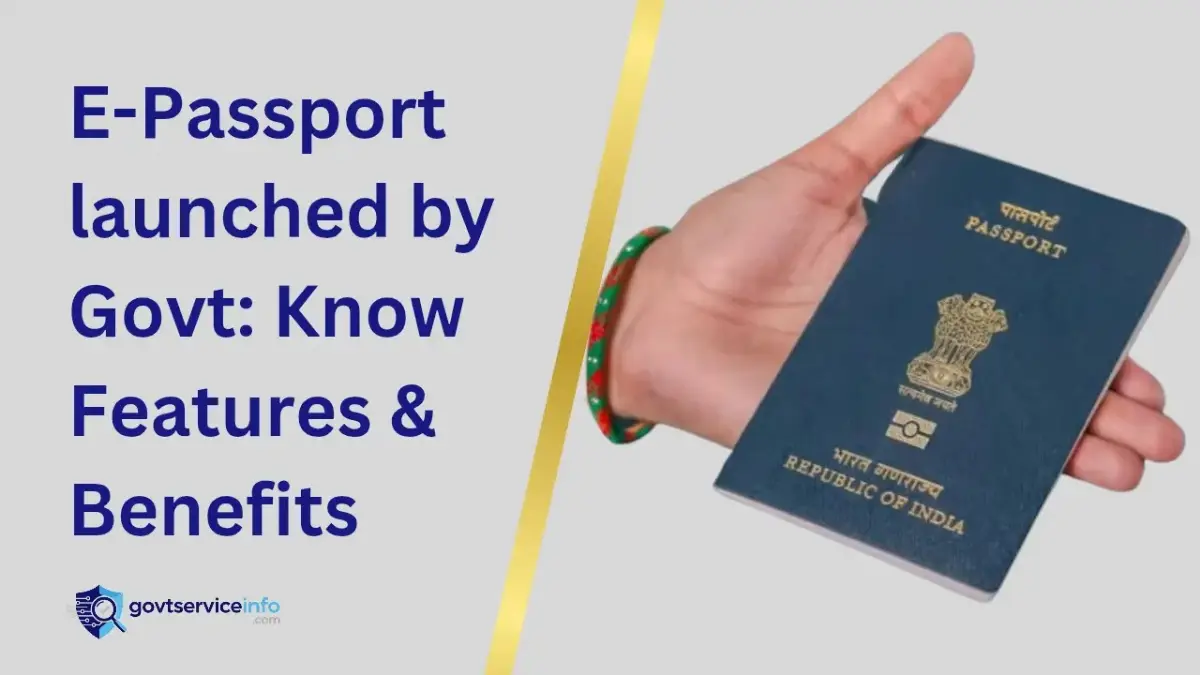
Govt of India is rolling out next-generation E-Passports to make international travel safer, faster, and more secure. E-Passports is a modern travel document containing an integrated electronic chip that stores your personal and biometric data. If you’re planning to renew your passport or apply for a new one, knowing what an e-Passport is and how to get it can save you time and hassle. This article covers the main features of India’s e-Passport, eligibility criteria, a step-by-step application guide, and FAQs.
Table of Contents
What is an e-Passport?
An e-Passport is a combined paper and electronic passport with a Radio Frequency Identification (RFID) Chip and an antenna embedded as an inlay of passport that contains the personal particulars and biometric information of the passport holder. It complies with International Civil Aviation Organization (ICAO) standards and allows faster immigration checks while minimizing the chances of fraud or forgery. These next-gen passport were first introduced on April 1, 2024, as part of a pilot program launched by the Ministry of External Affairs. Currently, only a limited number of passport offices are equipped to issue them, but the government plans to expand the service gradually to more centers in the coming months
Track every open notification & never miss a deadline
What is Main Features of e-Passport?
The Indian e-Passport is designed with advanced technology to ensure higher security and quicker authentication:
- Integrated electronic chip within the front cover
- Contains biometric information such as fingerprints, facial image, and iris scan
- Holds personal details including name, date of birth, passport number, and more
- Contactless chip with encrypted access for added safety
- Fully aligned with ICAO guidelines for global acceptance
- Minimizes chances of counterfeiting or duplication
- Machine-readable & tamper-resistant with advanced cryptographic signatures
- Same look & feel as a regular passport, but with the chip logo on the cover
These features collectively make India’s e-Passport a future-ready travel document recognized worldwide.
What is Benefits of e-Passport?
- Benefits of e-Passport Over Regular Passport?
- Enhanced security against fraud or forgery
- Faster immigration clearance at automated e-gates worldwide
- Global acceptance under ICAO compliance
- Same application process & fee as a regular passport
What is Eligibility for e-Passport in India?
- All Indian citizens eligible for a regular passport can apply for an e-Passport.
- Available for fresh applications as well as renewals/re-issues.
- Minors can also get e-Passports (with parental consent).
- Diplomatic and Official passports are already issued in the e-format.
- (Availability may vary by region check the official Passport Seva portal for current rollout status.)
How to Apply for an e-passport in India– Step by Step
Applying for an e-Passport is similar to applying for a regular passport. Here’s how:
- Step 1: Visit the official Passport Seva portal.
- Step 2: Register for a new account or sign in, then fill out the e-Passport application form.
- Step 3: Select your nearest Passport Seva Kendra (PSK) or Post Office Passport Seva Kendra (POPSK).
- Step 4: Pay the applicable e-Passport fee online using debit/credit card, net banking, or UPI.
- Step 5: Schedule an appointment at your chosen centre.
- Step 6: Visit the PSK/POPSK with original documents; your biometrics, photograph, and signature will be captured.
- Step 7: Complete police verification if required.
- Step 8: Track your application status on the portal or mPassport Seva App and receive your e-Passport by post.
FAQs on E-Passport
Is there an e-passport in India?
Yes, e-passport is rolling in India currently, only a limited number of passport offices are equipped to issue them, but the government plans to expand the service gradually to more centers in the coming months.
Is the e-Passport different from the current passport?
Yes. It looks similar but has an embedded chip with your biometric and demographic data, making it more secure and machine-readable.
Can I choose between a regular passport and an e-Passport?
If e-Passports are available in your region, you can opt for one while applying or renewing.
What is the fee for an e-Passport?
At present, the fee structure is the same as regular passports (₹1,500 for 36 pages; ₹2,000 for 60 pages – subject to change).
Will my old passport remain valid?
Yes. Existing passports remain valid until expiry. You can switch to an e-Passport at renewal.
Does an E-Passport speed up visa issuance?
No, visa processes remain the same, but immigration checks at airports become faster because of machine readability.
Whether it is mandatory for the existing valid passport holders to replace their passport with ePassport?
No. All Passports issued by Govt of India will continue to remain valid till their validity expiry date. As and when a respective Passport Office is technically enabled for issuance of ePassport, the citizens applying under that passport office will get the ePassport.
Which Document is required for Government Officer?
For Gazetted Government servants
i) Identity Certificate as per Annexure A
OR
ii) No Objection Certificate as per Annexure G
OR
iii) Prior Intimation Letter (PI) as per Annexure H
Which Document is required for Government Officer family?
For spouses of gazetted government servants
i) Identity Certificate as per Annexure A
OR
ii) An attested copy of marriage certificate issued by Registrar of
For dependent children below 18 years of gazetted government servants
i) Identity Certificate as per Annexure A
OR
ii) Birth Certificate issued by Municipal Authority or any office authorized to issue Birth Certificate by Registrar of Births and Deaths
OR
iii) School leaving certificate / Secondary School leaving certificate/ Certificate of Recognized Boards from the school last attended by the applicant or any other recognized educational institution
OR
iv) Passport copy of the government servant
What is the validity of No Objection Certificate (NOC) ?
The validity of No Objection Certificate (NOC) is Six months from date issue
Conclusion
India’s next-gen e-Passport combines advanced security features with global compliance to make travel smoother. If you’re applying for a passport soon, opting for an e-Passport will ensure future-ready convenience and safer journeys.
Read More: Unified Pension Scheme (UPS) key features & Benefits: UPS vs NPS which is better?





3 thoughts on “E-Passport launched in India: Features, Benefits, Application Process & FAQs (2025 Guide)”